Satu masalah kecil adalah kepelbagaian menamakan bahawa boleh digunakan untuk simpul satu, untuk umpamanya, seorang Nenek adalah satu Simpul yang Palsu, sekuntum Cengkih Sentakan adalah Simpul seorang Penambang, satu Simpul Ringkas adalah satu Ibu Jari Simpul. Tetapi apabila kami datang ke snelling sebentuk mata kail, nilon panjang tersangkut kepada cangkuk mungkin satu tangkas atau satu serungkup rambut.
Saya menemui kini yang pekerjaan sebenar mengikat serungkup rambut mungkin dipanggil tidur sebentar, manakala snelling kerap dengan cemburu terfikir tentang sebagai satu seni terbatas untuk nelayan lalat. Saya telah menangkap ikan dengan dasar nelayan di Terumbu Sawar Besar yang secara rutin tangkas pencangkuk-pencangkuk mereka.
Terbatas untuk garis-garis kekuatan pecah kurang daripada mengenai 20kg, proses adalah sederhana satu..
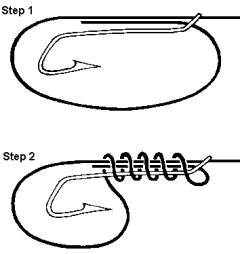
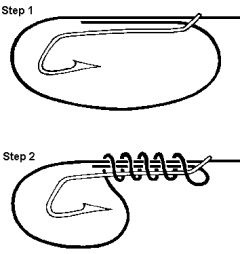
1 . Melalui berakhirnya talian, kesan atau purdah melalui mata dua kali, meninggalkan satu gelung tergantung di bawah cangkuk.
2 . Mengadakan baris-baris kedua-duanya sepanjang batang cangkuk.
Menggunakan gelung untuk menggulungkan ketat gelung-gelung sekitar batang dan kedua-dua baris, dari mata naik. Menggunakan daripada 5 untuk 10 pusing.
3 . Menggunakan anak jari mengadakan gelung-gelung ketat ini di tempat. Menarik talian (diperpanjangkan dari mata) sehingga gelung seluruh telah berlalu di bawah gelung-gelung ketat ini.
4 . Dengan gelung-gelung dibuat, menggunakan playar untuk menarik atas berakhirnya
talian.
Snell Knot adalah simpul baik dipilih bila memancing. Ia boleh digunakan oleh pemancing kerana ia digunakan kedua-dua mengakhiri talian untuk mengikatkannya.
Cara-cara untuk mengikat Snell Knot
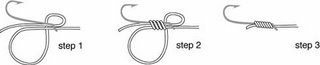
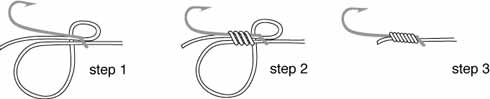
1. Feed one end of the leader through the hook eye going 2-4 inches past the eye. Then feed the other end of the leader through the eye in the opposite direction. Hold the hook and leader ends between thumb and forefinger. Allow the excess leader to hang down in a large loop.
2. Holding the hook and leader in your left hand, grab this excess leader loop and the part of this loop close to the hook and wrap it over the hook shank and both ends of the leader toward the hook's barb. Go around the hook 7 or 8 times, keeping the newly made wraps contained and tight with your left thumb. Pull the short end of the leader that is through the eyelet with your right hand slowly, until the entire loop of leader feeds through it. Be sure to continue holding the 7 or 8 loops with your left hand so the knot will not unravel.
3. When it is almost tight, use your fingernails to slide it up against the eye of the hook. Finally, pull the short end of the leader and the standing line at the same time to completely tighten the knot. Trim the tag end.
4. Tying the Snell Knot is complete.
- When boating through the open water, always keep an eye out for keys that may indicate a school of fish. First, if you ever see birds that are feeding on small bait fish, there are bound to be large game fish below the surface. Second, look for any floating debris. Nearly everytime you encounter a floating piece of wood that is fairly large, you'll find large game fish in the area.
- Many fishermen think that they should catch their live bait over the shallow reefs before heading out to the deeper water to fish for the larger species. If you can't catch your live bait in the area where you are planning on fishing, then what makes you think that the large game fish would be in that area? Afterall, they will be feeding in the areas where there are lots of bait fish.
When bait fishing, the angler hooks live or dead bait and then casts, letting the bait sink. Depending on the game fish the angler intends to catch, he or she then might let the bait sit on bottom, hoping that the bait's odor attracts fish; jig the bait up and down so that the action attracts fish; or reel the bait in, attempting to entice fish swimming between the bottom and the surface.
Almost every type of freshwater and saltwater game fish may be caught with bait. Live bait is more attractive than dead bait to predatory game fish, which can smell and see the difference. Dead bait, however, is easier for the angler to store and place on the hook. Popular baits in fresh water include worms, crayfish, insect larvae, fish eggs, frogs, and leeches. In salt water, anglers use small, whole fish; pieces of fish; and live crabs and shrimp. Some anglers also chum, which entails throwing additional pieces of dead bait into the water in hope of attracting game fish.
Popular Posts
-
Menjaga Alatan Pancing Cara terbaik menjaga peralatan pancing supaya tahan lama ialah 'mencuci' masa sewaktu balik dari aktiviti mem...
-
Most people choose color based on personal preferences, but for fishermen, color is a necessity. Each application requires a specific color ...
-
The search for the target audience is primarily the fish is first necessary to try the fish. Remember that the fish living in water, where t...