


During late summer and early fall, the inshore and near shore waters become inundated with what many people refer to as the "Fall Speedsters". I think of them as miniature "torpedoes". Oceanic Bonito, Green Bonito, False Albacore and Spanish Mackerel come in close to the shore in a feeding frenzy supported by vast amounts of small baitfish. These speedy strong fish are capable of runs that can put a bonefish to shame and they will test the endurance of the angler and his tackle to the maximum limit.
This year is no exception as the waters are loaded with bait and busting schools of these fine gamefish are a common sight. The problem many anglers have with this
fishery is that being related to the tuna family these fish have extremely keen eyesight and are extremely line shy. As a result, hooking up with these fish is difficult if not impossible with typical tackle that might be used to catch other species such as bluefish. In addition, approaching a feeding school is a difficult proposition as their senses are extremely keen and they are capable of moving in any direction at great speed.
How can one expect to be successful in catching such great fish? The answer is actually a combination of things that must all happen at one time. To narrow it down I will reduce it to two things; "Tackle" and "Stalking."
Tackle requires two very important considerations. It must be top quality and terminal gear must be almost invisible. Weather it be light or medium spinning or fly tackle, rods, reels and line must all be in perfect shape. When you do hook up, you can expect a blistering run of up to 100 yards and sometimes more. A bad guide, chaffed line or rough drag will result in an instant break-off. All tackle must be working properly and knots perfectly tied.
I have had great success with spinning gear using a Penn Power Graph rod #PG 5871A teamed up with a Penn Prion #PR2400 reel loaded with #10 or #12 Berkley XL monofilament line. This outfit gives me the casting range, extremely smooth drag and the power needed to subdue these magnificent fish.
The terminal tackle of course is most important for without an effective life-like presentation that will produce a strike the rest of the system would be meaningless. In this case stealth is most important. Fluorocarbon leader material is the heart of the system. At the end of my running line from the reel I tie a very small barrel swivel. I use a "Trilene" knot for all connections. To the other side of the barrel swivel I attach a 15 inch piece of #10 fluorocarbon leader material. I then tie the fluorocarbon leader directly to the lure. My favorite lure is a blue-silver "Crippled Herring" in ½ or ¾ oz. size. This system will not fail to produce a strike if it comes within sight of the fish.
When fly-fishing I am using a Penn International #1090 SPT Graphite rod (9 foot, 10 weight) mated with a Penn 2.5 reel. I am loading it up with as much 30 lb. backing as I can get on the reel and finishing it off with a "Rio Products" intermediate #20250 Tarpon fly line. I hand tie the tapered butt section of the leader keeping it at about 6 feet and add a 15 inch tippet section of #10 fluorocarbon leader with my fly tied directly to the fluorocarbon with a "Trilene" knot. My preferred fly pattern is an olive/white "Clouser Minnow" in 1/0 or 2/0 size. This setup is deadly with just about anything that swims in these waters and does especially well with these tough and wary fish.
With the proper tackle in order, the "Stalk" is the next most important consideration. These fish could never be approached if they were not busily feeding. When they are whipping the water into a froth in a feeding frenzy, they are preoccupied with the chase and can be approached if one is careful. Excessive noise will definitely put the fish down.
The best method is to observe the direction in which the feeding school is moving and set up the boat in the direction they are heading. Move slowly into position and get the rods at ready to make a quick and accurate cast just in front of the moving school. When the lure hits the water let it sink for just a second and make a steady rapid retrieve while holding the tip of the rod near the surface of the water. When fly-fishing I retrieve with a few rapid strips followed by a short pause then more rapid strips. I also keep the rod tip pointed right at the fly with tip at the surface of the water. Do not try to strike the fish with the rod. The constant rapid retrieve with spinning gear and a "strip strike" with fly gear will most effectively set the hook. I have found these techniques to be most effective. I have also found it necessary on most occasions to shut down all sonar recorders. The underwater "pinging" sound they make can spook the fish.
On certain days the fish are very erratic making the "line them up" method previously described very frustrating. In this case a chase will often work. Invariable there are terns or gulls following the schools of fish, waiting for the opportunity to dive in for an easy meal when they chase the bait to the surface. If you watch the birds carefully, you can determine where an unseen underwater school is located. Follow the birds so that you will be close when the fish come to the surface or even blind cast to where you think the school is swimming. All anglers should be ready to make their casts immediately when the opportunity presents itself. When the fish show on the surface, hopefully fairly close to the boat, quickly turn the boat in their direction, take it out of gear, shut down the motor and silently coast in their direction. If the school stays on top long enough you should have a shot at getting the lures in the strike zone.
When all of this comes together you will certainly hook up with these miniature "torpedoes" of the sea. When you do, you will never forget the excitement of that moment and I guarantee that you will become a devotee of this game.
Monday, February 14, 2011

Sunday, February 13, 2011
Live Bait - The Terminal End
Taken out of context, this title may seem redundant. To a fisherman however, it has a special
meaning. There are really two ends to a fishing line. One end is fixed to the reel, rod, and the anxious fisherman. The other end, the terminal end, is the one that is supposed to catch the fish. The terminal end however, will not catch fish unless it has some sort of hook, lure, bait, etc.. These additions are referred to as terminal tackle. The "terminal end" is most important to the fisherman but is often overlooked! Regardless of the investment in boats, rods, reels, time or effort, if terminal tackle is not appropriate to the job at hand, then all of that investment is wasted.

Live-bait fishing for trophy stripers is one of my favorite kinds of fishing. I have specialized in this type of fishing for many years. I have had the opportunity to try all types of tackle and terminal gear. In the course of this investigation I have had many successes and failures, all of which have led me to the combination that works most effectively. This is a natural process, and I am sure that I will continue to experiment to try to improve or adapt to changes as they come. When live-bait fishing, a well balanced, quality rod and reel is an important consideration. I am using a Penn Power Stick, with a Penn 535 graphite Reel, spooled with 25lb Ande line. This combination is light and sporting and yet powerful enough for the biggest of bass. One very important rule I believe in firmly is, "SIMPLE RIG-SHARP HOOK!". What does this mean when it comes to live-bait fishing? It means that the bait itself attracts the fish. Anything else that may distract the attention of the fish will reduce the chance for a pick-up and a hook-up! Keep the rig as basic as possible and always check and sharpen your hooks when necessary.

I do most of my live-bait fishing around the Fire Island Inlet on Long Island in New York. I use a very simple but effective terminal rig. I clinch knot a 3oz. drail to my 25lb line. I tie a double surgeon’s loop at one end of a four foot leader of 50lb mono and clip it to the snap swivel at the trailing end of the drail. I clinch knot the leader to a 6/0 - 8/0 live bait style hook and the rig is complete. The loop at the drail end of the leader allows for a quick replacement when necessary. The only variation to this rig might be an increase or a decrease in drail weight to match the current conditions and water depth. The change that might be required in drail weight is a simple one to accomplish. Simply go up or down by one ounce increments until just enough weight is present to maintain the bait within a few feet of the bottom. If you can lift the rod tip then quickly drop it and feel the drail touch bottom, the weight is sufficient. The most common baits used in live-bait fishing for striped bass are bunker and eels. When fishing eels I use only one type of hook in all situations, a short shank live bait style hook in 6/0 or 7/0 size. These hooks are very strong and usually quite sharp right out of the package. Don’t forget to check the point and put a file to it if it isn’t needle sharp. To hook the eel, the hook is run into the mouth and out an eye socket. This placement of the hook gives it a sure hold in tough tissue and also allows the eel to continue to pass water through its mouth and stay healthy and lively.

Fishing live bunker or any other live, hard bodied baitfish, requires more consideration. In the past, most anglers fished bunker using a 4/0 size treble hook. One point was inserted through the lower jaw, a second point through one nostril and the third remained unattached. This method is no longer acceptable as it results in many gut hooked fish that will not survive when released. A treble hook is almost impossible to remove cleanly once it has been swallowed beyond the narrow throat. In these memorable days of a revived striped bass fishery with size and bag limits, many bass must be returned to the water so that they may survive! The use of treble hooks is therefore not in the best interest of the sport. Considering an alternative to using treble hooks, I tried experimenting with single hook arrangements. I found that when hooked in any body part other than the head, the bait did not swim correctly in a hard running tide. I was not getting many pick-ups due to its unnatural action. I then tried hooking the bait in a non-vital part of the head. The action improved, and I was getting lots of pick-ups. However, due to the tough tissue in the head region of most baitfish, the hook would not pull free from the bait. I was getting pick-ups but pulling the hook on most fish.

Being determined I finally came up with a variation that has proven to work extremely well. I use a large #56 Berkley double-lock snap. I attach the small side of the snap to the eye of a single 7/0 or 8/0 live bait hook. This must be done in an orientation that sets the open large side of the snap turning opposite to the bend in the hook. I then use the hook or a needle to make a small hole in the tough head or nose tissue of the baitfish. The point of the large side of the snap is then passed from the top of the head or nose, through the hole, out the mouth and snapped closed. The hook remains free swinging along the side of the head. Fish caught with this rig are almost always mouth hooked meaning they may be released relatively unharmed. One additional hook arrangement should also be a part of the live-bait fisherman’s arsenal. Big bluefish have a nasty habit of attacking a bait from the tail and are therefore rarely hooked. Even if they do manage to get hooked, they almost always chew through the mono leader and are lost during the fight. For such situations I have devised another little addition to my tackle box. I prepare tail hooks on a short piece of vinyl coated braided or single strand wire. I make them about six inches long with a barrel swivel at one end and a 7/0 hook at the other end. If the bluefish show up I can quickly add the tail hook to my double-lock snap and use a rubber band to fasten the hook to the tail of the bait. I can then have fun catching and beating the bluefish at their game.

One additional point to consider for the safe release of fish in the spirit of conservation or when tagging, gaffing a fish that is going to be released is not acceptable! Fish that are to be released should be carefully netted and handled gently while onboard. Even netting is detrimental to the fish as it removes some of the natural protective slime from the body. When it is possible I use a device called a "BogaGrip" that locks onto the jaw of the fish. I simply lean over the side of the boat while holding the leader and lock it on the lower jaw. I can then remove the hook while the fish is still in the water or gently bring it aboard. It works quite well and it also has a built-in accurate scale for weighing your trophy. If the fish is brought into the boat, a wet towel placed over the head and eyes will keep it calm. Remember to return the fish to the water as soon as possible and not to handle it by the gills. Placing your hand in the gill slits can cause irreparable damage to the fish.
The "terminal end" is a critical part of fishing tackle. I have spent much time developing and perfecting terminal rigs that are effective. I have found this both challenging and rewarding. Experimenting and being innovative is part of what makes fishing so much fun! I hope my suggestions will work well for you.
Good Fishing, Capt. Al Lorenzetti Copyright: Al Lorenzetti ©1990 Published in "The Fisherman" 1990
Live-bait fishing for trophy stripers is one of my favorite kinds of fishing. I have specialized in this type of fishing for many years. I have had the opportunity to try all types of tackle and terminal gear. In the course of this investigation I have had many successes and failures, all of which have led me to the combination that works most effectively. This is a natural process, and I am sure that I will continue to experiment to try to improve or adapt to changes as they come. When live-bait fishing, a well balanced, quality rod and reel is an important consideration. I am using a Penn Power Stick, with a Penn 535 graphite Reel, spooled with 25lb Ande line. This combination is light and sporting and yet powerful enough for the biggest of bass. One very important rule I believe in firmly is, "SIMPLE RIG-SHARP HOOK!". What does this mean when it comes to live-bait fishing? It means that the bait itself attracts the fish. Anything else that may distract the attention of the fish will reduce the chance for a pick-up and a hook-up! Keep the rig as basic as possible and always check and sharpen your hooks when necessary.

I do most of my live-bait fishing around the Fire Island Inlet on Long Island in New York. I use a very simple but effective terminal rig. I clinch knot a 3oz. drail to my 25lb line. I tie a double surgeon’s loop at one end of a four foot leader of 50lb mono and clip it to the snap swivel at the trailing end of the drail. I clinch knot the leader to a 6/0 - 8/0 live bait style hook and the rig is complete. The loop at the drail end of the leader allows for a quick replacement when necessary. The only variation to this rig might be an increase or a decrease in drail weight to match the current conditions and water depth. The change that might be required in drail weight is a simple one to accomplish. Simply go up or down by one ounce increments until just enough weight is present to maintain the bait within a few feet of the bottom. If you can lift the rod tip then quickly drop it and feel the drail touch bottom, the weight is sufficient. The most common baits used in live-bait fishing for striped bass are bunker and eels. When fishing eels I use only one type of hook in all situations, a short shank live bait style hook in 6/0 or 7/0 size. These hooks are very strong and usually quite sharp right out of the package. Don’t forget to check the point and put a file to it if it isn’t needle sharp. To hook the eel, the hook is run into the mouth and out an eye socket. This placement of the hook gives it a sure hold in tough tissue and also allows the eel to continue to pass water through its mouth and stay healthy and lively.
Fishing live bunker or any other live, hard bodied baitfish, requires more consideration. In the past, most anglers fished bunker using a 4/0 size treble hook. One point was inserted through the lower jaw, a second point through one nostril and the third remained unattached. This method is no longer acceptable as it results in many gut hooked fish that will not survive when released. A treble hook is almost impossible to remove cleanly once it has been swallowed beyond the narrow throat. In these memorable days of a revived striped bass fishery with size and bag limits, many bass must be returned to the water so that they may survive! The use of treble hooks is therefore not in the best interest of the sport. Considering an alternative to using treble hooks, I tried experimenting with single hook arrangements. I found that when hooked in any body part other than the head, the bait did not swim correctly in a hard running tide. I was not getting many pick-ups due to its unnatural action. I then tried hooking the bait in a non-vital part of the head. The action improved, and I was getting lots of pick-ups. However, due to the tough tissue in the head region of most baitfish, the hook would not pull free from the bait. I was getting pick-ups but pulling the hook on most fish.

Being determined I finally came up with a variation that has proven to work extremely well. I use a large #56 Berkley double-lock snap. I attach the small side of the snap to the eye of a single 7/0 or 8/0 live bait hook. This must be done in an orientation that sets the open large side of the snap turning opposite to the bend in the hook. I then use the hook or a needle to make a small hole in the tough head or nose tissue of the baitfish. The point of the large side of the snap is then passed from the top of the head or nose, through the hole, out the mouth and snapped closed. The hook remains free swinging along the side of the head. Fish caught with this rig are almost always mouth hooked meaning they may be released relatively unharmed. One additional hook arrangement should also be a part of the live-bait fisherman’s arsenal. Big bluefish have a nasty habit of attacking a bait from the tail and are therefore rarely hooked. Even if they do manage to get hooked, they almost always chew through the mono leader and are lost during the fight. For such situations I have devised another little addition to my tackle box. I prepare tail hooks on a short piece of vinyl coated braided or single strand wire. I make them about six inches long with a barrel swivel at one end and a 7/0 hook at the other end. If the bluefish show up I can quickly add the tail hook to my double-lock snap and use a rubber band to fasten the hook to the tail of the bait. I can then have fun catching and beating the bluefish at their game.

One additional point to consider for the safe release of fish in the spirit of conservation or when tagging, gaffing a fish that is going to be released is not acceptable! Fish that are to be released should be carefully netted and handled gently while onboard. Even netting is detrimental to the fish as it removes some of the natural protective slime from the body. When it is possible I use a device called a "BogaGrip" that locks onto the jaw of the fish. I simply lean over the side of the boat while holding the leader and lock it on the lower jaw. I can then remove the hook while the fish is still in the water or gently bring it aboard. It works quite well and it also has a built-in accurate scale for weighing your trophy. If the fish is brought into the boat, a wet towel placed over the head and eyes will keep it calm. Remember to return the fish to the water as soon as possible and not to handle it by the gills. Placing your hand in the gill slits can cause irreparable damage to the fish.
The "terminal end" is a critical part of fishing tackle. I have spent much time developing and perfecting terminal rigs that are effective. I have found this both challenging and rewarding. Experimenting and being innovative is part of what makes fishing so much fun! I hope my suggestions will work well for you.
Good Fishing, Capt. Al Lorenzetti Copyright: Al Lorenzetti ©1990 Published in "The Fisherman" 1990
Saturday, February 12, 2011
Rapala-Ultra Lite Kit

More world record fish have been caught with Rapala lures than any other in the world. Any other! That includes a world record on every continent in the world except Antarctica. Rapala holds the world record for world records.
The Rapala Pro Staff anglers have hand-picked this exclusive combination of Rapala lures, perfect when ultra-lite angling for any species of gamefish. A special bonus of a Rapala Knot Decal and a Rapala Lure Key Ring are included.
SPECIFICATIONS
Model Number- Item Description
ULKT1 -Ultra Lite Kit
Sunday, November 28, 2010
Trip Tioman 2 - 2010

Mukut is a small fishing village at the southernmost tip of Pulau Tioman. It is also one of the most secluded and quiet villages, owing to its inaccessibility and remoteness. The beach over here is rocky at most parts, though there are clear patches good for swimming. Kampung Mukut's appeal to visitors and tourists lies in nature - This place is covered in lush rainforest that hides majestic waterfalls, along with the majestic Twin Peaks Mountain.


Wednesday, November 03, 2010
Stinger Butterfly Drift
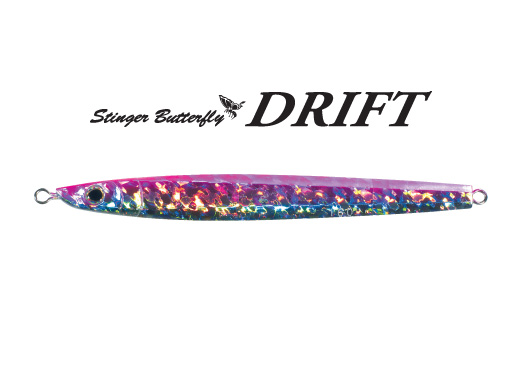
Description
The Stinger Drift is a more specialized jig that often used when an extremely erratic and exaggerated action is needed to induce a strike. This jig offers a fish atttracting side to side "drift" action when the jig is dropped or on the upstroke when the actual jigging is done. Upon jigging, the jig actually sits vertically momentarily in the water column making it especially attractive to fish that attack from the below and allowing the jig to stay in the strike zone for a longer period of time. This jig is ideal for targeting large bottom wreck fish such as Groupers, Flame Snappers and Escolars, that will only feed in a specific strike zone in the water column.
Subscribe to:
Posts (Atom)
Popular Posts
-
Menjaga Alatan Pancing Cara terbaik menjaga peralatan pancing supaya tahan lama ialah 'mencuci' masa sewaktu balik dari aktiviti mem...
-
 Most people choose color based on personal preferences, but for fishermen, color is a necessity. Each application requires a specific color ...
-
 The search for the target audience is primarily the fish is first necessary to try the fish. Remember that the fish living in water, where t...


